

The traditional "profit at all costs" business model is failing. It has fueled a global crisis of meaning and belonging, deepened by environmental strain. In many ways, business as we know it is seen as the root cause of these problems.
On the other hand, many entrepreneurs are taught that their goal is simply to solve a "pain point" to create a successful venture. While problem-solving is necessary, it often remains reactive: addressing immediate symptoms rather than the root causes of our most complex challenges. This school of thought, inherited from mainstream tech entrepreneurship, focuses on building what people want right now. In doing so, it often accidentally creates more problems than it solves at a systemic level.
Meanwhile, in the world of social entrepreneurship, many impact ventures are seen as cause-driven but not commercially viable. This leaves them dependent on grants and philanthropy, severely limiting their ability to scale.
As we look ahead, we see the rise of an entirely new model: the Changemaker Business.
What is a changemaker business?
A changemaker business is built on the belief that purpose and profit are not in conflict. While traditional business focuses solely on shareholder value, a changemaker business focuses on shared value: the simultaneous pursuit of systemic transformation and financial growth. It combines entrepreneurial creativity with a radical determination to solve global problems.
This model refuses to choose between "doing good" and "doing well." It uses profit as the fuel to scale solutions independently, creating the financial resources necessary to move toward a vision of a thriving future.
Examples: Changemaker businesses in action
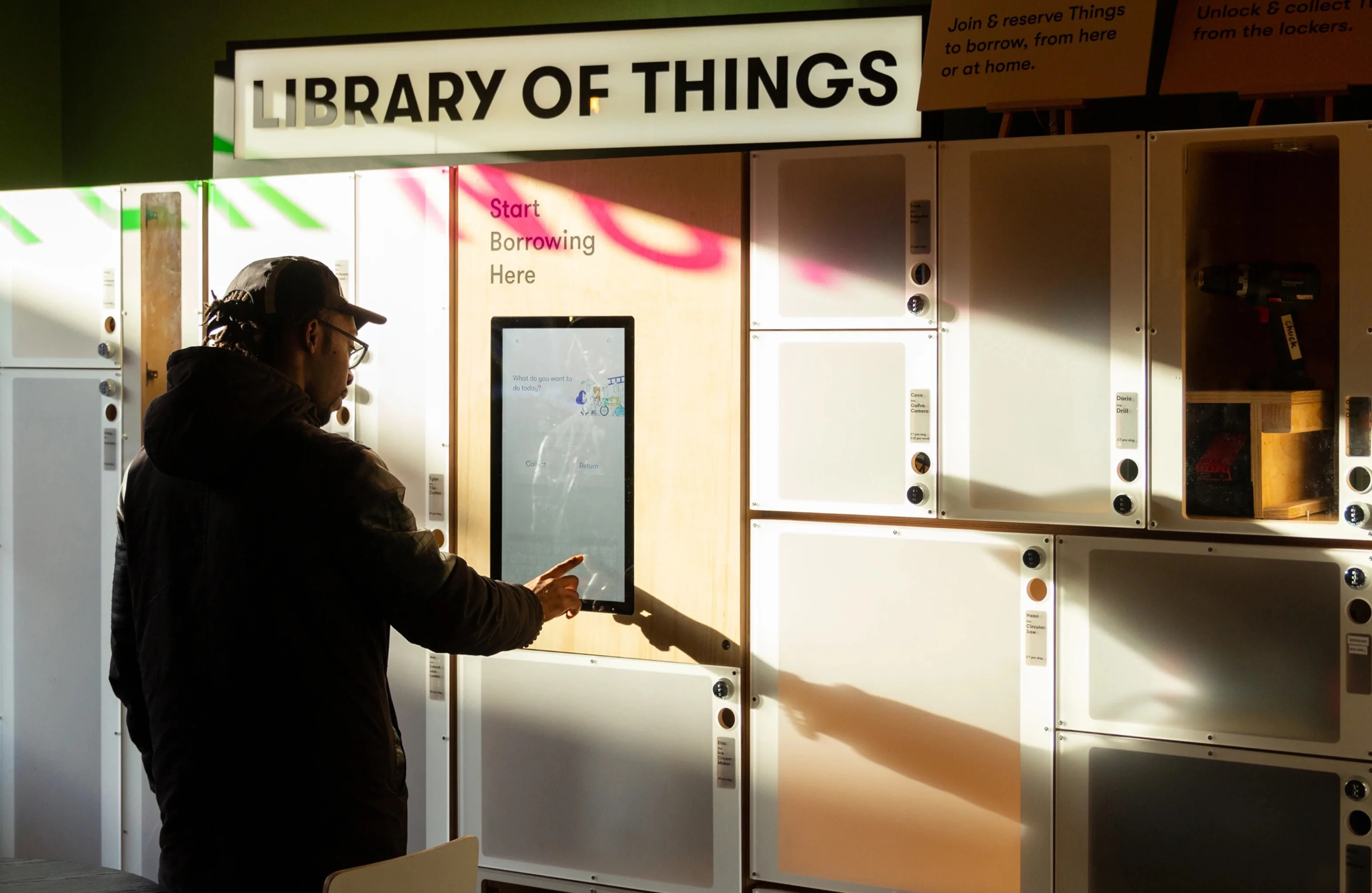
- Library of Things: A “library” that lets people borrow tools, appliances, and equipment instead of buying them, to promote a circular economy and reduce overconsumption.
- Soko: A jewelry brand connecting Kenyan artisans with global markets. Their virtual factory mobile platform allows distributed small-scale producers to fulfill large-scale global orders without a centralized factory.
- Rurban: An equitable arts exchange fostering partnerships between Indigenous artisans and global fashion leaders. Their model sustains heritage through seasonal product drops and art licensing.
- Sugru: A moldable glue designed to encourage the repair and personalization of belongings. By empowering individuals to extend product lifecycles, they turn DIY maintenance into a tool for waste reduction.
- BRCK: A rugged device providing reliable internet access in underserved areas. Their durable hardware democratizes connectivity in harsh environments where traditional infrastructure fails.
Why the future depends on them
The stakes have never been higher. We are living through a "polycrisis" where global challenges are interconnected. We don't just need businesses that do less harm, we need businesses that actively Make Better.
Changemaker businesses are essential because:
- They lead with radical empathy: They root every strategy in deep empathy for the people and ecosystems they serve.
- They leverage collective intelligence: They create "third spaces" where diverse perspectives (e.g., local communities, ecological stakeholders, and technology) converge to co-create solutions that no single entity could find alone.
- They spark cultural movements: They recognize that culture is the engine of change, using storytelling to turn passive consumers into active participants.
- They embody visionary leadership: They operate with a futures-shaping mindset, anchoring every present-day decision in the long-term vision of a thriving world.
- They generate shared value: They move beyond the trade-off between profit and purpose, instead using commercial success as the engine to scale purpose-driven solutions.
You can create your own
Whether you are a creative, an entrepreneur, or an educator, you have the agency to build a business that serves as a bridge to a more desirable tomorrow. The future isn't a destination, it is a project we build together.
Join us and let’s Make Better.
